Ice Cider
Ice Cider Valverán 20 Manzanas
At Valverán Cider Mill, which belongs to Masaveu Bodegas, they were pioneers in the production of ice cider in Spain in 2007.
Valverán 20 Manzanas takes its name from the fact that at least 20 apples are needed to produce the contents of a 37.5 cl bottle. After being hand-picked, washed and inspected on a sorting table, these apples are crushed and pressed, and the resulting juice is decanted into stainless steel tanks using a cooling process.
Once clarified, this must is frozen to –20°C in a carefully controlled process to naturally concentrate the sugars from the apples.
Following a slow process of separating the ice from the must, the resulting essence ferments for 10 months at a temperature of 10°C and then remains for 8 months in stainless steel tanks on its own lees.
What is ice cider?
Ice cider is a unique drink produced by fermenting apple must at low temperatures. Unlike traditional cider, ice cider is produced through a process of natural concentration, in which the water present in the must from more than 11 varieties of Asturian apples freezes and is removed, resulting in a highly concentrated drink rich in natural sugars.
Characteristics of ice cider
Ice cider is unique and stands out for its sweetness and the balance between acidity and freshness. Its aromatic notes may be reminiscent of caramelised apples, plum compote and even ripe quinces. Its flavour is intense and pure velvet; it is silky and well-balanced, with notes of concentrated apple, caramel and honey. Furthermore, it usually has a higher alcohol content than traditional cider, ranging from 8% to 12% vol.
Why is called ice cider?
The term originates from the ‘Ice Cider’ that first appeared in Canada in the late 1990s, specifically in Quebec. Christian Barthomeuf was the pioneer of ice cider; a Frenchman living in Canada who, in 1989, began experimenting with the technique used to produce ice wines to make cider from frozen apples. After years of experimentation, it was in 1999 that he succeeded in bringing ice cider to market, although he was not the only one, as Guy Tardif also launched his own ice cider that year.
Production of ice cider
Carefully selecting the apples is the first step in making ice cider.
Selection of apple varieties
Selection of apple varieties
The various native apple varieties from the Asturias region used to make ice cider have been carefully selected, one by one, to bring out the complex flavours, nuances and aromas that characterise this fantastic elixir.
The cultivation and ripening of apples
The cultivation and ripening of apples
The area is the second key factor; situated in a unique setting and blessed with the perfect climate for growing and ripening apples, the Valverán apple orchard is the largest in Asturias.
Hand-picking the apples
Hand-picking the apples
But what makes it so special is that only the very best apples, selected by hand, are used in each vintage of Valverán 20 Manzanas cider, resulting in exquisite aromatic notes and a flavour that fills the palate from the very first to the very last sip. To produce a bottle of Valverán ice cider, at least 20 apples are required – hence its name.
Pressing and freezing process
Pressing and freezing process
Once the apples have been harvested, they are sent for pressing, yielding a fresh juice which is then subjected to controlled low temperatures. During this freezing process, the water separates from the rest of the juice, forming ice crystals, which in turn release sugars, acids and aromas.
Fermentation
Fermentation
Through the slow fermentation of the concentrated must at low temperatures, the sugars are converted into alcohol which, following maturation and filtration, will develop the characteristic colours, flavours and aromas of ice cider.
Pairing and serving ice cider
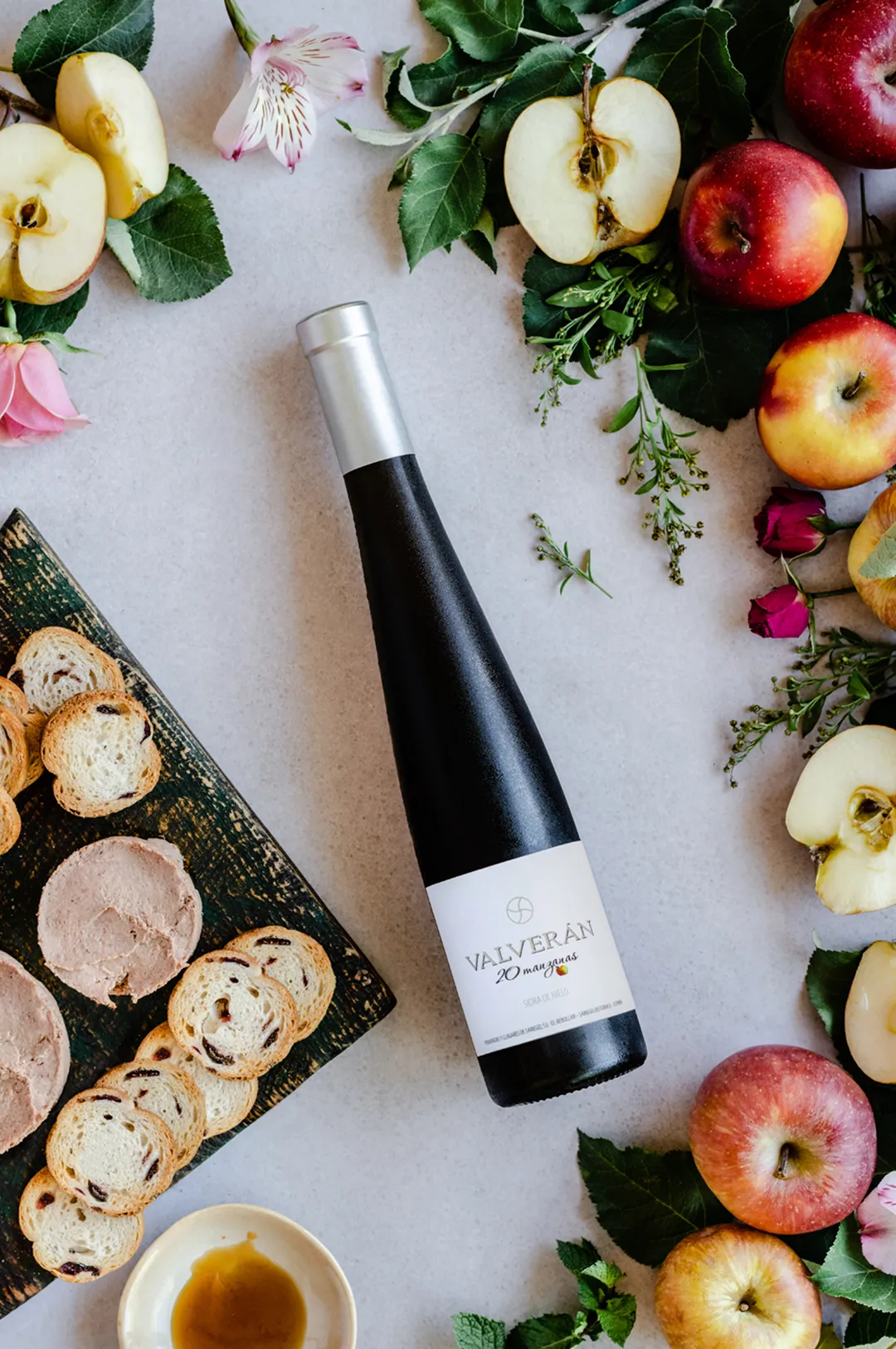
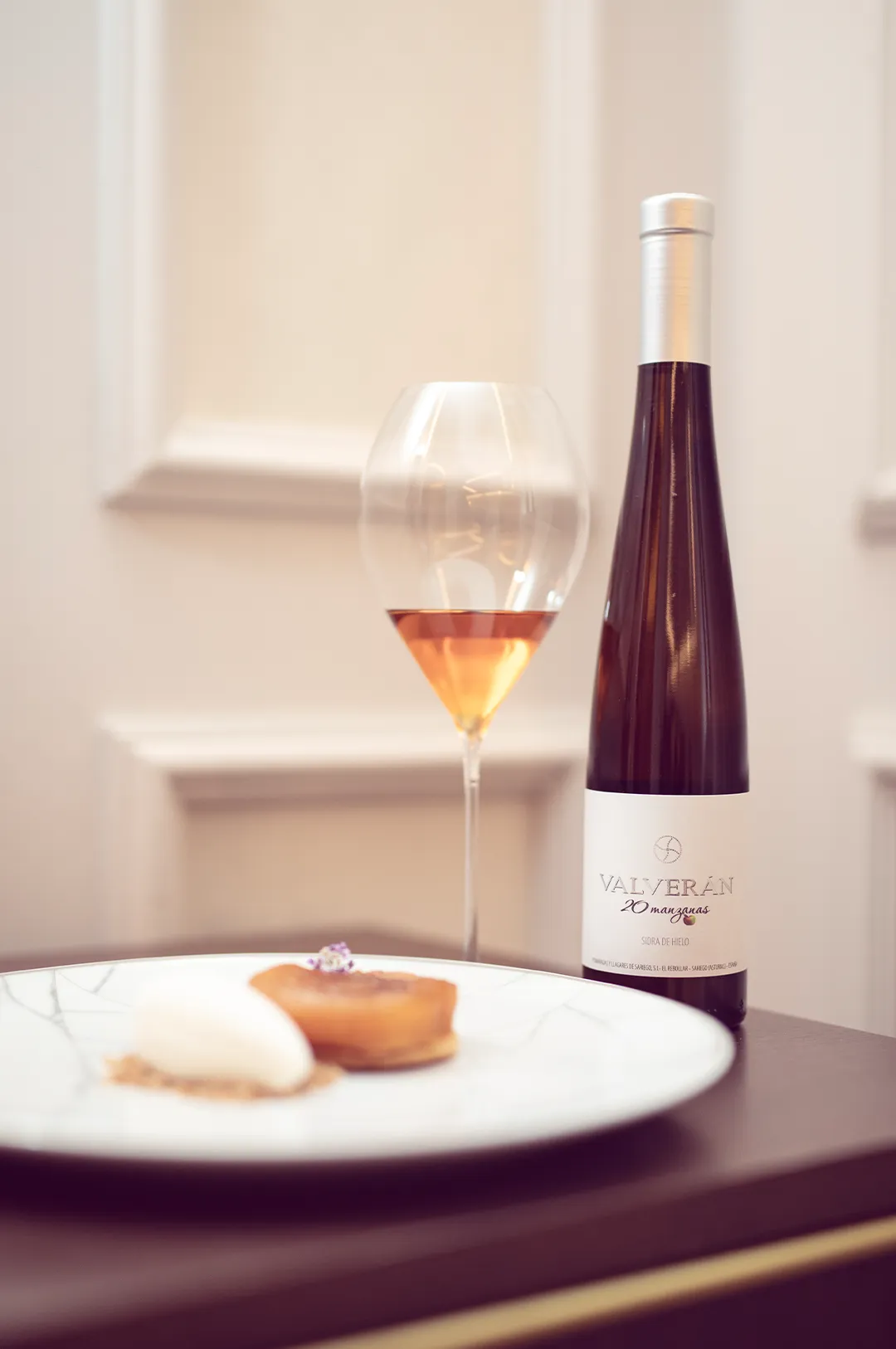
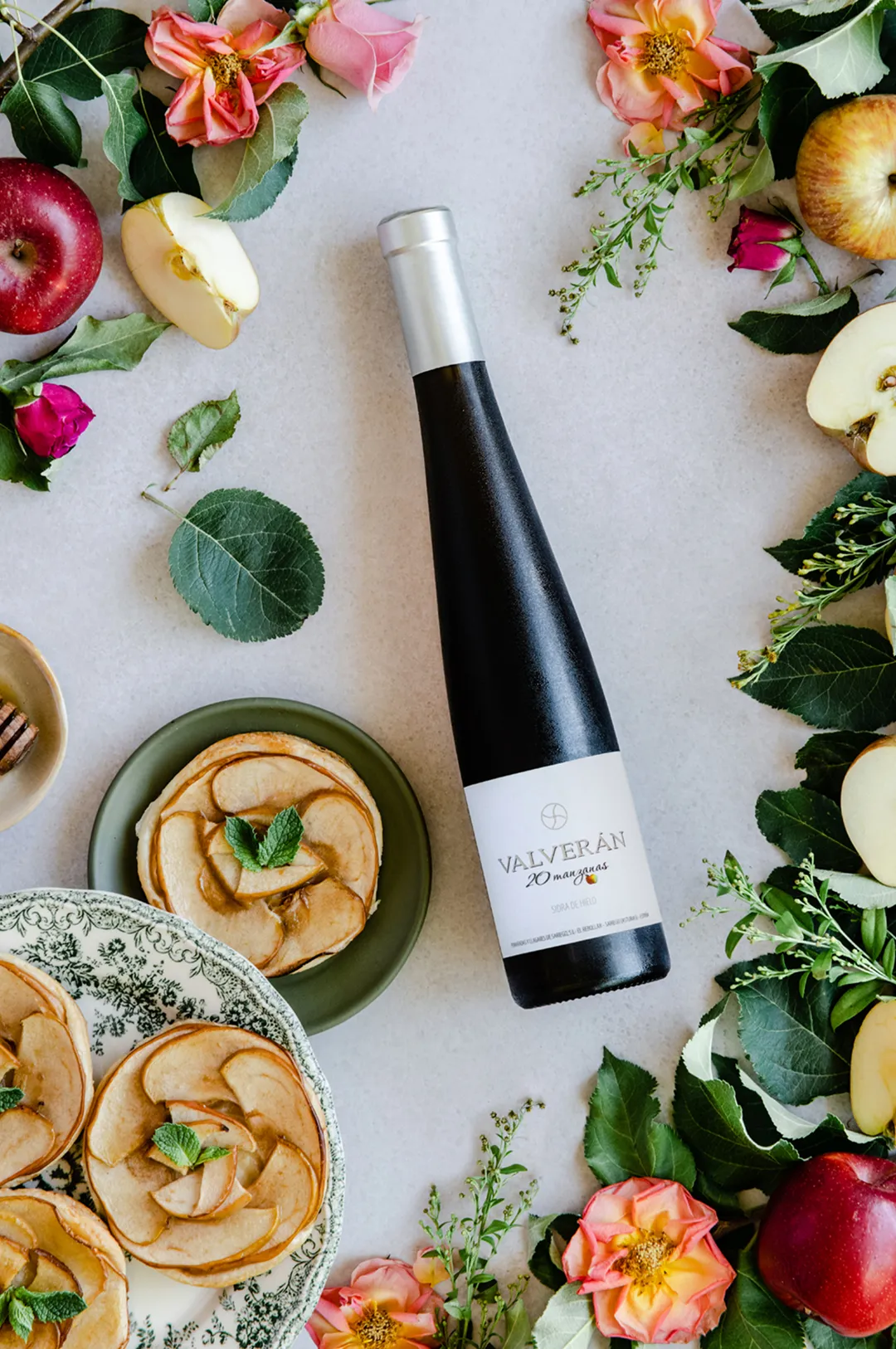
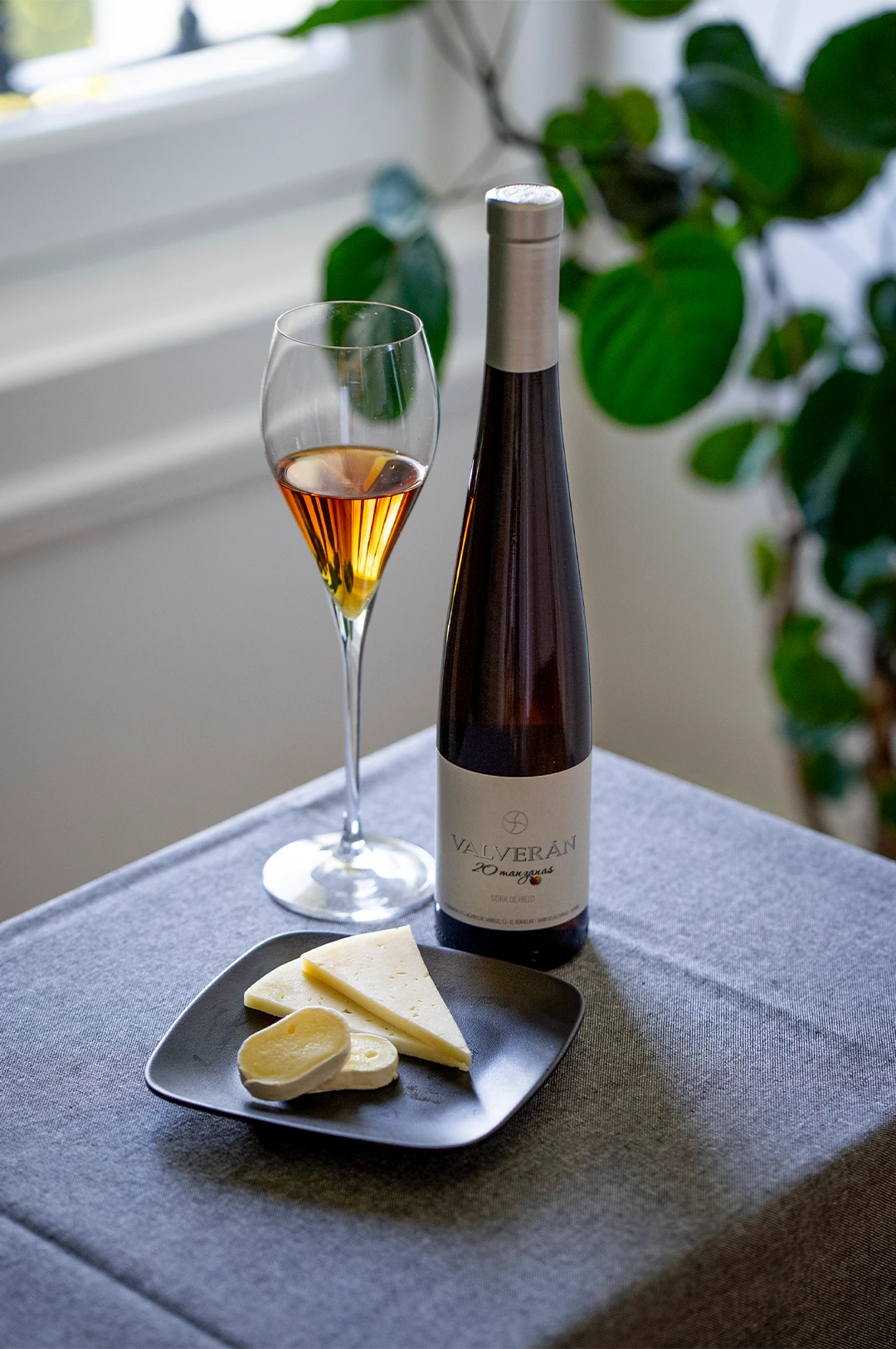
Ice cider is a versatile drink that can be enjoyed in various ways. It can be served as an aperitif, a dessert or to round off a meal. Ice cider pairs perfectly with many foods. It can be served with mild cheeses, foie gras or any dessert that isn’t overly sweet. It can also be used as an ingredient in cocktails and mixed drinks, adding its unique flavour and sweetness.
Ice Cider Valverán 20 Manzanas
Ice cider is inspired by the exclusive Canadian ice ciders, but in our case, rather than harvesting frozen apples, we freeze the must we extract from those apples. We often say that it takes 20 local apples to make a single bottle. But in reality, we need many more, because only the 20 best apples, selected by hand, will be turned into Valverán cider. Its production requires complex temperature-control systems to replicate, in the cider house, the effects that frost would have on the orchard. It is a delicate and painstaking process, after which an exclusive limited edition of just 18,000 bottles is bottled.